Can diet help with endometriosis? Here’s what you need to know

Endometriosis affects around 1 in 10 women in the UK, but it takes 7 to 10 years, on average, to secure a diagnosis. Many women spend years being told their pain is “normal” before receiving proper support.
“Endometriosis remains underdiagnosed, misunderstood, and underfunded,” says endometriosis advocate Carla Cressy. “Without clear diagnostic tools or definitive treatments, many end up navigating years of physical pain, infertility, fatigue, and emotional strain with little guidance or validation.”
In this article, we explore the symptoms, treatment options, and look at whether anti-inflammatory nutrition can support wellbeing alongside medical care.
What is endometriosis?
Endometriosis is the name given to the condition where tissue similar to the lining of the womb starts growing elsewhere – often around the ovaries, fallopian tubes, or pelvic cavity.
Each month, these cells respond to menstrual cycle hormones in the same way as the womb lining – building up, then breaking down and bleeding. But unlike a period, this blood has no way to leave the body, leading to inflammation, pain, and sometimes scarring.
The actual cause of endometriosis is unknown, though theories include retrograde menstruation (where menstrual blood flows backwards), immune dysfunction, and genetic factors.
Recognising the symptoms
Common symptoms include:
- Severe period pain that interferes with normal daily living
- Pain in the lower tummy and back that worsens during menstruation
- Painful ovulation
- Heavier periods – needing to change pads and tampons frequently
- Pain during or after sex
- Painful bowel movements
- Digestive issues – often misdiagnosed as IBS
- Chronic fatigue
- Fertility challenges – around half will experience difficulties conceiving
“My symptoms were repeatedly misdiagnosed – everything from IBS and gastroenteritis to ‘lazy bowel syndrome,'” shares Carla. “It was incredibly isolating to be told that nothing was wrong when I knew something was deeply off in my body.”
Treatment options
There is currently no permanent cure for endometriosis, but symptoms can be managed effectively with the right approach.
“Treatment really depends on the individual and the severity of their symptoms,” says Carla. “The main medical approaches include hormonal therapies, pain management, and sometimes surgery.”
Medical treatments include:
- Pain relief – anti-inflammatory painkillers like ibuprofen
- Hormonal treatments – the pill, IUD, or GnRH analogues
- Surgery – keyhole surgery to remove tissue, or more major procedures
- Pelvic physiotherapy – to strengthen supporting muscles
However, as Carla points out: “These treatments don’t always address the underlying inflammation or immune dysfunction. That’s why many people turn to complementary approaches such as anti-inflammatory nutrition, stress management, and gentle movement. The best approach tends to be holistic.”
The inflammation connection
“While endometriosis is often talked about as a hormonal issue, I believe it’s really a hormone-inflammatory condition,” explains Katja Alexandra, women’s health coach and nutritional therapist.
“The immune system recognises these misplaced cells as a problem and responds with chronic inflammation – meaning it’s switched ‘on’ all the time. This ongoing inflammation leads to pain, bloating, fatigue, and tissue scarring.”
This chronic inflammation might also affect how oestrogen is produced and used in the body, creating a cycle that can worsen symptoms.
“That’s why nutrition, gut health, and stress management are so key,” says Katja. “They all directly influence inflammation and help bring the body back into balance.”
How nutrition can help
“What we eat has a direct impact on inflammation because every meal sends chemical signals through the body that can either calm or fuel that inflammation,” explains Katja.
“It’s a bit like having a fire burning inside the body; our goal with nutrition is to cool the flames, not to add gasoline.”
Foods that may contribute to inflammation:
- Ultra-processed foods
- Refined sugar
- Trans fats and poor-quality oils high in omega-6
- Alcohol and caffeine
These foods might also disrupt the gut microbiome, allowing inflammatory compounds to leak into the bloodstream.
“On the other hand, whole, nutrient-dense foods like oily fish, colourful fruits and vegetables, nuts, seeds, and olive oil help nourish beneficial gut bacteria,” says Katja. “Food isn’t just fuel, it’s information. Every bite tells your body how to respond.”
What to eat more of
“It’s less about restriction and more about nourishment,” says Katja. “I tell my clients to eat for how they want to feel – not in the moment but how they want to feel in an hour, a day or a month’s time.”
Focus on:
- 30 different plants a week – colourful vegetables and fruit for antioxidants
- Quality proteins – fish, eggs, pulses, or organic grass-fed meat
- Healthy fats – olive oil, avocado, nuts, and seeds
- Minimal processed foods, refined sugar, and alcohol
Carla shares: “When I began focusing on anti-inflammatory nutrition, I started to notice changes. My digestion improved, my energy levels became steadier, and my pain and bloating became more manageable. It gave me a way to actively support my body after years of feeling powerless.”
Key nutrients for endometriosis
“Even with the best diet, it can be difficult to get therapeutic amounts of certain nutrients,” explains Katja. “Our modern farming practices mean nutrient content is lower, and stress and gut issues affect how well we absorb nutrients.”
This is where supplements can help and research suggests these nutrients may be beneficial:
- Omega-3 fatty acids – found in oily fish like salmon, sardines, and mackerel; help reduce inflammatory compounds
- Vitamin D – regulates the immune system and reduces inflammation; most UK women are deficient, especially in winter
- Antioxidants – vitamins C and E, selenium, zinc, and turmeric help protect against oxidative stress
- Iodine – essential for thyroid function, which influences hormone balance and energy
Our pick of supportive supplements is Endo+ from Doctor Seaweed.
“We’ve combined seaweed (a natural source of iodine), turmeric with black pepper for absorption, and vitamins A, D3, and C to help regulate immune cell activity and reduce inflammation,” explains Dr Craig Rose, marine biologist and Doctor Seaweed founder. “Core to the product is that all the nutrients are from natural food sources – nothing synthetic.”
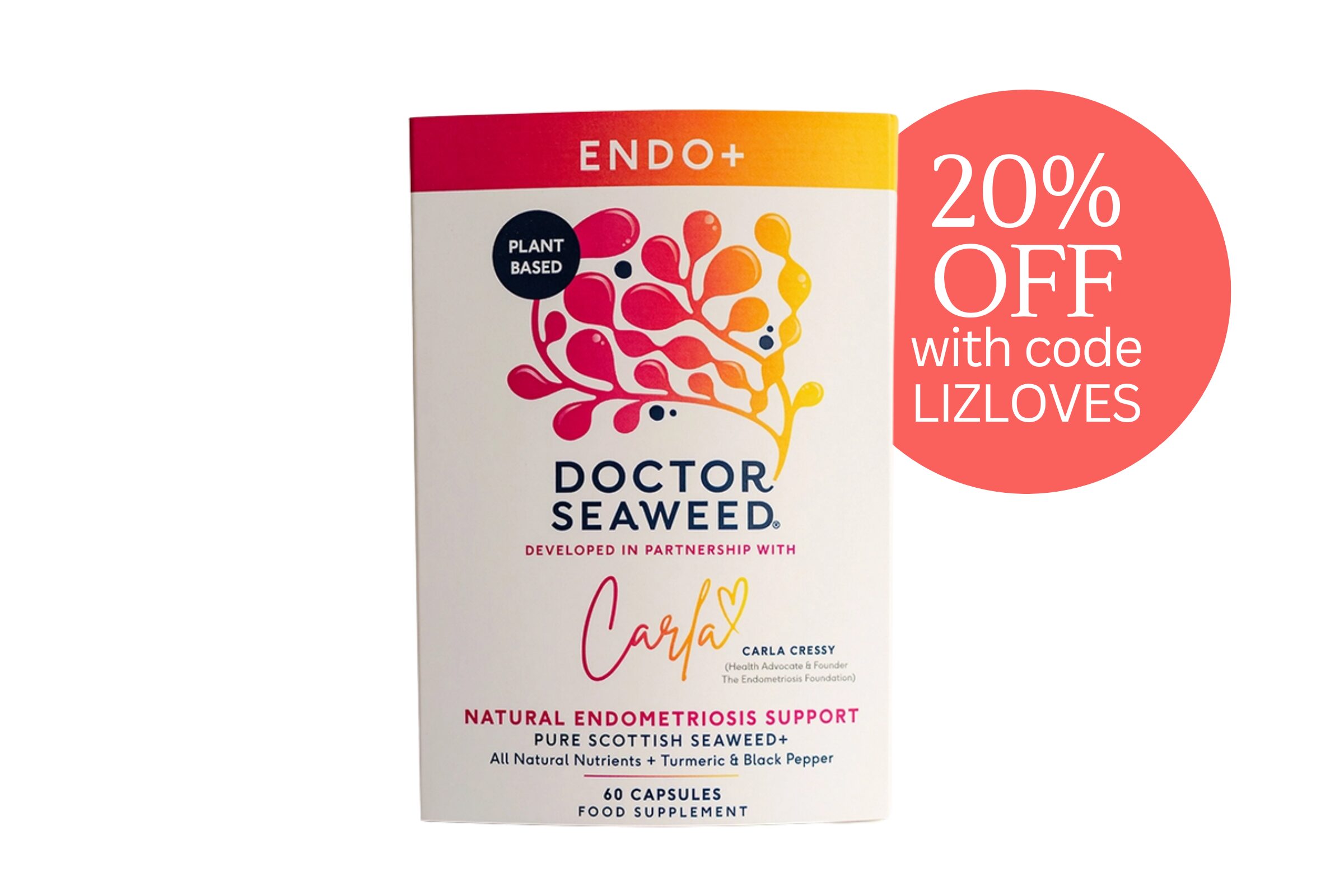
Shop Doctor Seaweed Endo+ and use LIZLOVES for 20% off.
Getting a diagnosis
A GP will usually discuss symptoms and may examine the abdomen or pelvis. The only definitive way to diagnose endometriosis is through a laparoscopy – where a camera is passed through a tiny incision in the stomach.
Anyone experiencing symptoms that negatively affect quality of life should speak to their GP and advocate for proper investigation. It’s important not to dismiss severe symptoms as “normal” period pain.
“Small, consistent actions – like eating anti-inflammatory foods, managing stress, moving gently, and prioritising rest – can make a meaningful difference over time,” says Carla. “It’s about building a toolkit that helps you live with endometriosis, not constantly fight against it.”